
 Español
 Français
 Pусский
 繁體中文
繁體中文 简体中文
简体中文 Select another language


e already knew Panerai’s historic “8 Giorni”; now comes the “31 Giorni”. A specialist in purpose-built tool watches operating within a clearly defined territory, the Florentine brand has long made extended power reserves one of its signatures. As early as the 1950s, Panerai relied on manual-winding Angelus SF240 movements delivering around eight days of autonomy for watches supplied to the Italian and Egyptian navies.
The inscription “8 Giorni Brevettato” appeared on several military references, notably the celebrated 1956 GPF 2/56 “Egiziano”. The tradition therefore continues today - stretched to 31 days. According to Panerai CEO Emmanuel Perrin, the new movement is conceived as a tribute to those historic 8 Giorni models. But how exactly did the brand accomplish such a feat?
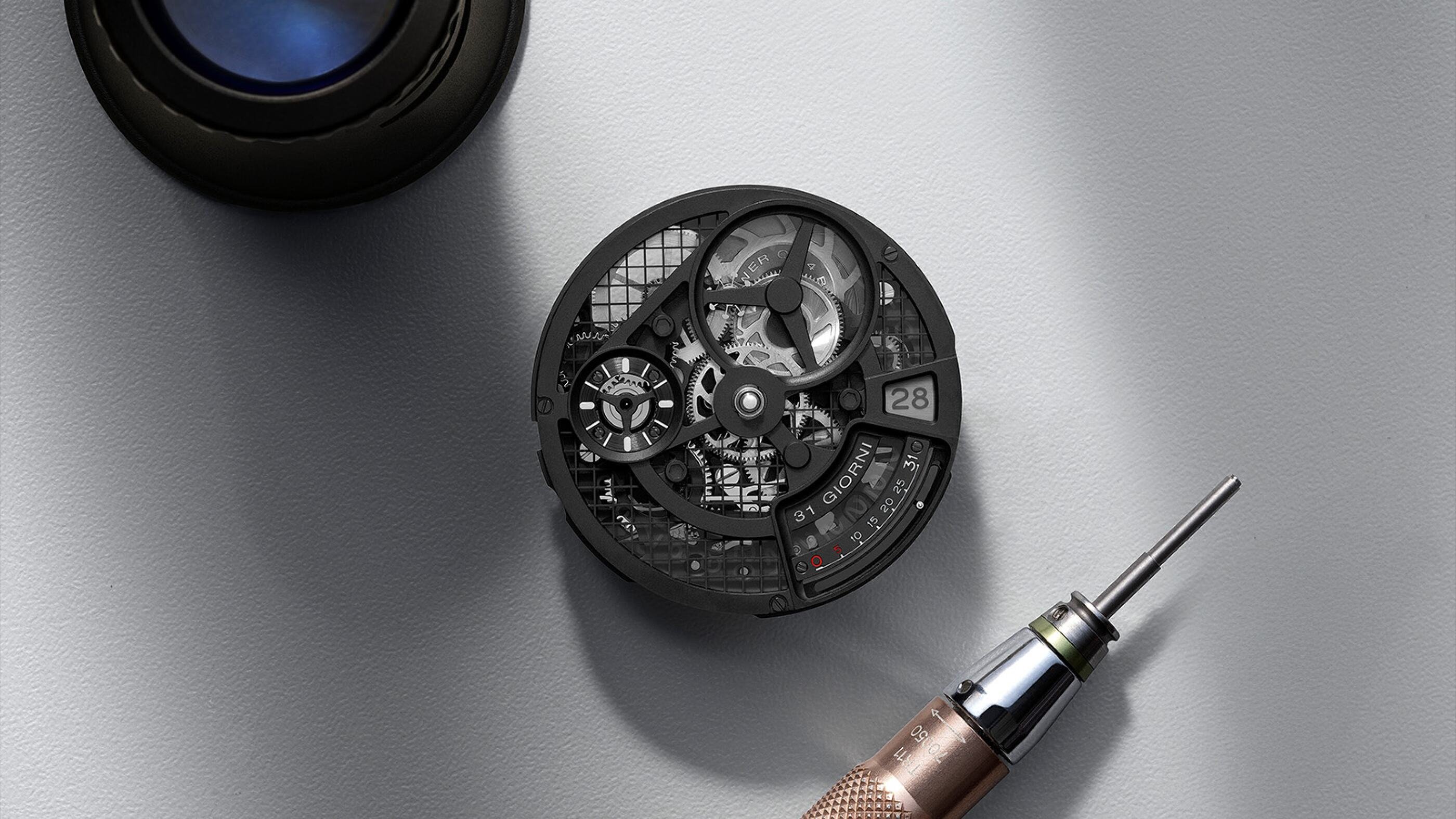
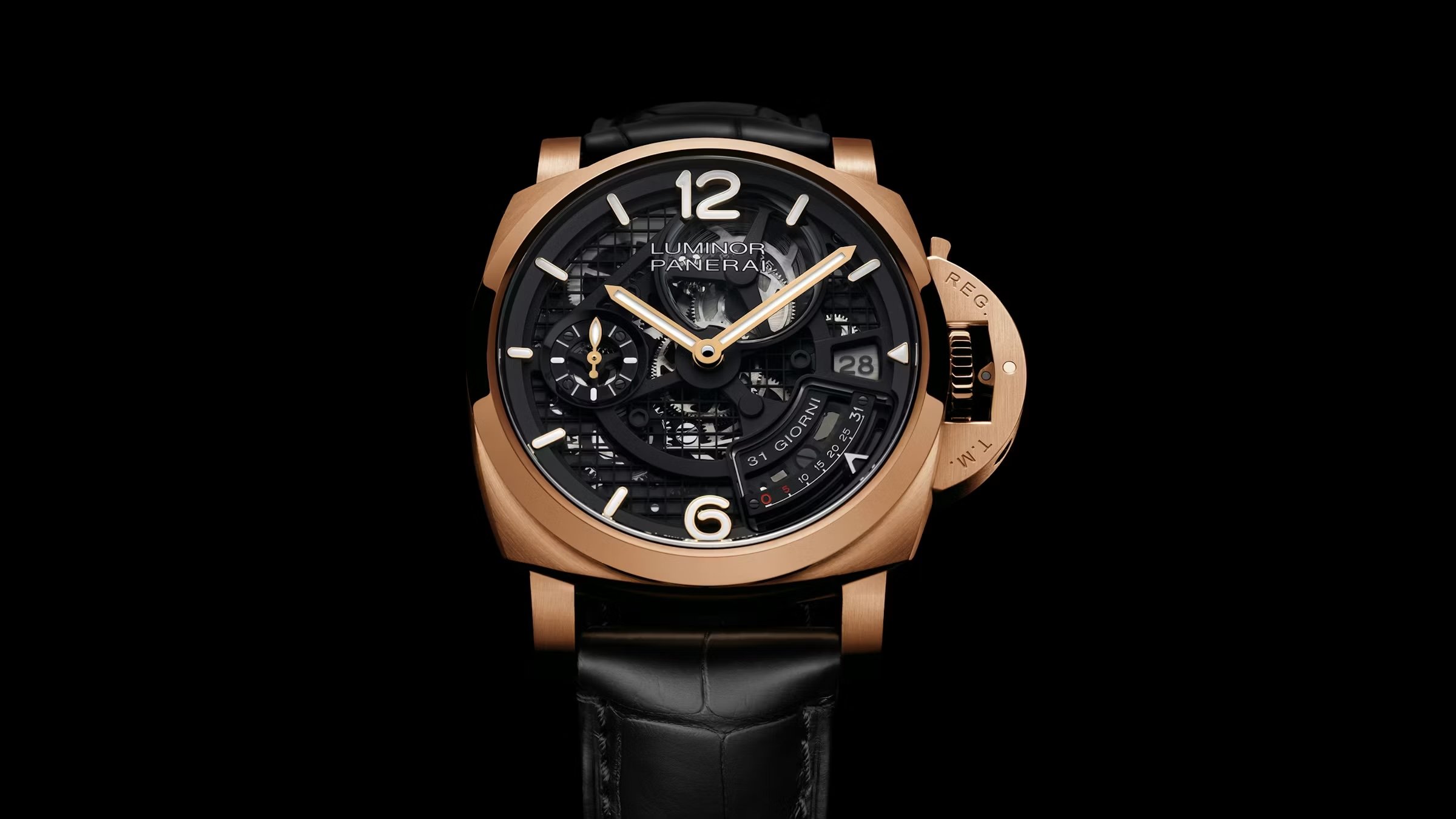
The manual-winding, skeletonised P.2031/S calibre - developed over seven years and powering the new Panerai Luminor 31 Giorni PAM01631 - requires exactly 128 turns of the crown to be fully wound. Behind this spectacular autonomy lie four barrels and no less than 3.3 metres of mainsprings. Yet the true subject here is not simply duration itself, but rather the way Panerai has chosen to manage this immense reserve of energy.

In mechanical watchmaking, storing energy is relatively straightforward: one merely increases the length of the mainsprings and multiplies the barrels. The real challenge comes afterwards. A mechanical movement dislikes both extremes - excessive force at the beginning of the running cycle and dwindling torque at the very end of autonomy.

When the springs are fully wound, the torque transmitted through the gear train becomes exceptionally high. Balance amplitude rises excessively, creating “knocking” phenomena capable of disturbing the rate and compromising precision. In a conventional movement, the effect remains manageable. In a calibre powered by four barrels containing more than three metres of mainspring, it becomes critical. Immediately after winding, the movement simply runs too “strong”. For a short period, amplitude becomes excessive, potentially causing the watch to gain time.
Controlling power
The solution devised by Panerai’s Laboratorio di Idee takes the form of a newly patented component: the torque limiter. The mechanism functions like an energy safety clutch. Once the optimal winding threshold has been reached - precisely after the aforementioned 128 crown turns - the system automatically disengages, preventing any overload of the movement.

The principle is fundamental: Panerai does not seek to exploit the entirety of the theoretically available energy, but only the range within which the movement operates under ideal chronometric conditions. In reality, the calibre contains approximately 36 days of potential energy. Panerai deliberately chooses to use only 31 of them.

The approach consists in eliminating the extremes of the mainspring’s operating curve: the first days, when torque is too aggressive, and the final days, when energy becomes insufficient and precision inevitably deteriorates - until the watch eventually stops after increasingly irregular performance, unless rewound, which would hardly be considered “elegant”.
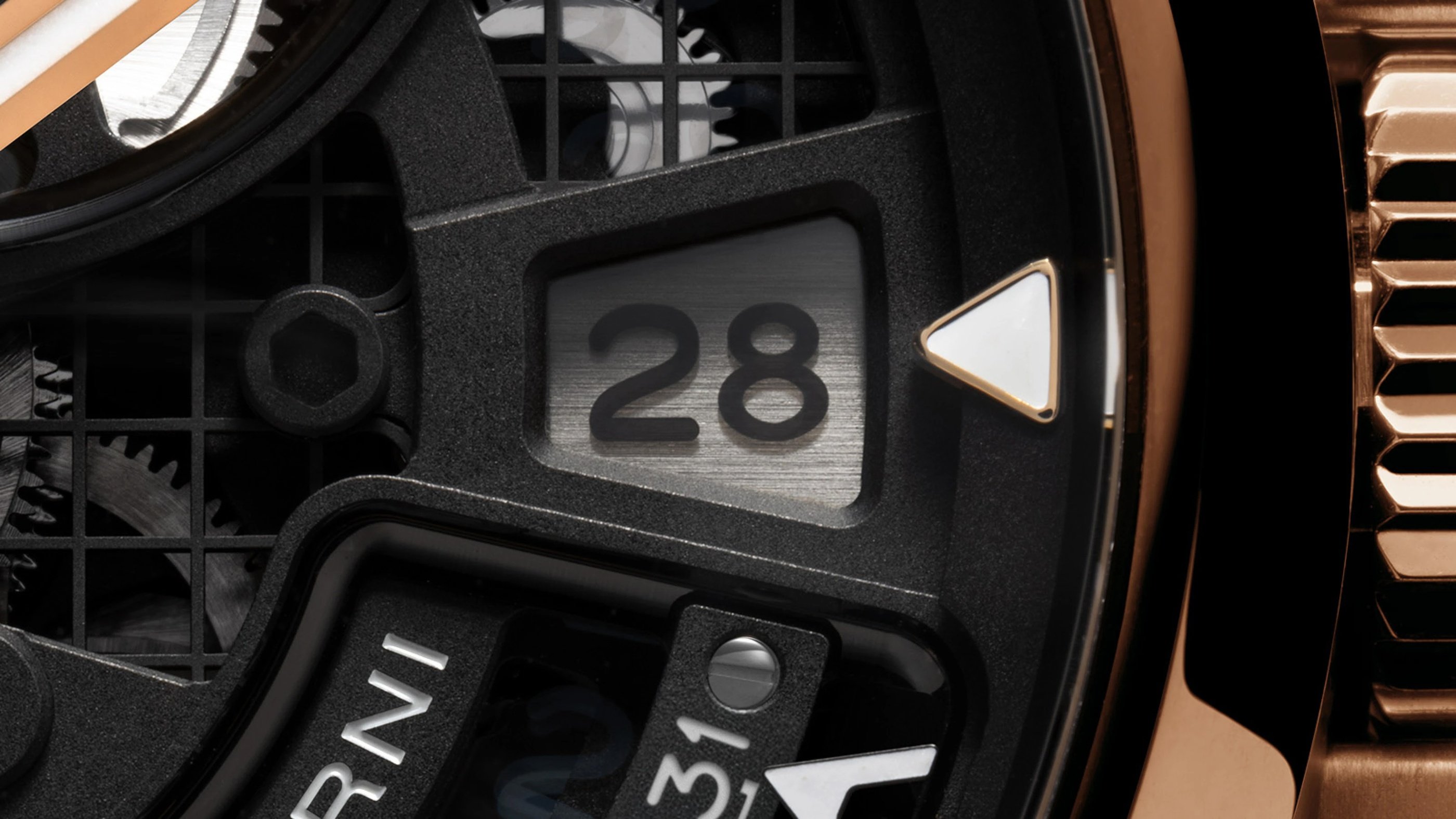
This is a watch that prefers to stop rather than continue operating with weakened amplitude and declining chronometric stability. To achieve this, Panerai developed a mechanism linked to the power-reserve indicator that halts the balance once the optimal operating zone has been exhausted.
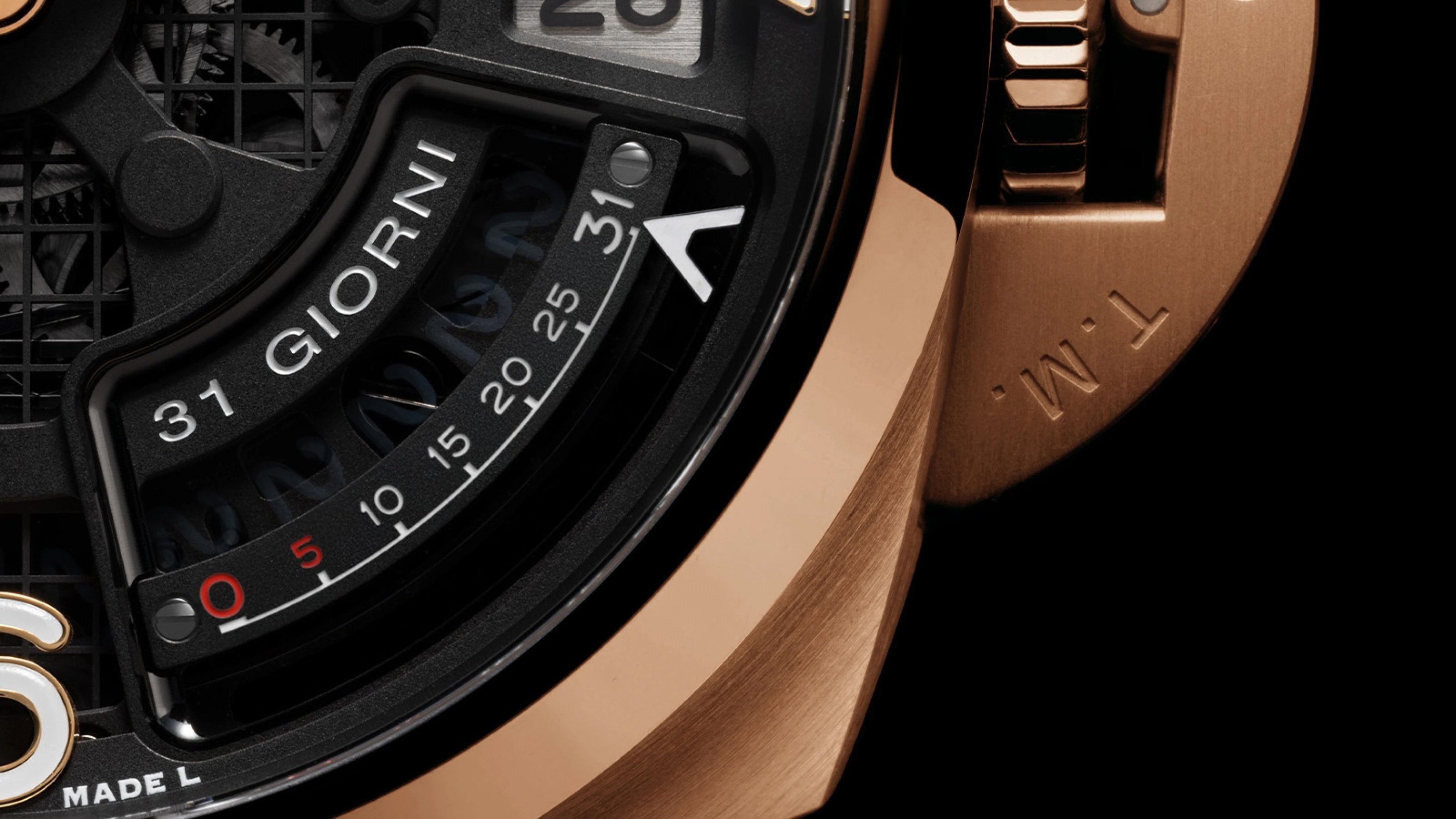
The system relies on a complex rack mechanism combined with a vertical spring. When the indicator reaches zero, the device instantaneously blocks the oscillation of the balance. The wearer therefore never experiences those final days of degraded performance. These 31 days are, in effect, the movement’s 31 “best” days. An elegant illustration of the principle “less is more”. And, one might add, 31 days is already rather a lot.