


 Español
 Français
 Pусский
 繁體中文
繁體中文 简体中文
简体中文 Select another language


érôme Lambert appears, by all accounts, a fulfilled man. Returning to the helm of the venerable Jaeger-LeCoultre Manufacture on January 1, 2025 - after holding senior roles within the Richemont Group - he has, in his own words, reclaimed his “dream job.”
In 2002, at just 32, he became the youngest CEO in the Maison’s history. A personal milestone - and a challenge he embraced with the stamina and discipline of a seasoned marathon runner.
On one hand, he pursued the product strategy set by his predecessor, Henry-John Belmont: the Reverso and Master Control collections, powered by calibres conceived and produced on rue de la Golisse in Le Sentier, offered a value proposition few could rival. The Reverso, in particular, cultivated a loyal following, finding its place on the wrists of both entrepreneurs and accomplished creatives.
On the other, Lambert encouraged R&D teams to push boundaries. Within the watchmaking ecosystem, Jaeger-LeCoultre gradually evolved in stature. Once known primarily as a supplier of calibres, the Maison began asserting itself through the development of its own high complications - signaling a clear ambition to stand alongside the great Manufactures.
-

- Master Hybris Inventiva Gyrotourbillon à Stratosphère. Calibre 178 showcases a triple-axis tourbillon comprising 189 components for a total weight of just 0.78 grams. The inner cage completes a full rotation in 20 seconds, the central (or reference) cage in 60 seconds, and the outer cage in 90 seconds—each crafted in titanium. The 950 platinum case, issued in a limited edition of 20 pieces, measures 42 mm in diameter and 16.15 mm in thickness. Reference: Q5306480.

The Hybris Mechanica collection, developed over nearly a decade, embodies this ascent: multi-axis tourbillons, patented minute repeaters, perpetual calendars - all executed with exemplary finishing. In parallel, the métiers d’art have flourished through limited editions celebrating guilloché, enamelling, engraving and gem-setting.
The 2026 novelties confirm this trajectory, underscoring the brand’s ambition to innovate at the highest level, both technically and aesthetically. Lambert has clearly internalized a defining shift in the Swiss watch industry: fewer watches sold, at higher prices - an equation that decisively favours Haute Horlogerie. We met him in Lisbon, on the occasion of the reopening of the Jaeger-LeCoultre boutique, redesigned in partnership with long-standing retail partner Torres Group.
-

- Jérôme Lambert
- ©Johann Sauty
Europa Star: You are once again at the helm of the Jaeger-LeCoultre Manufacture after a decade leading the Richemont Group. Did you find the Manufacture changed?
Jérôme Lambert: With historically low staff turnover, I was greeted by many familiar faces. That is a positive sign - and it partly explains how Jaeger-LeCoultre has shaped modern watchmaking. As early as 1833, Antoine LeCoultre pioneered the concept of the Manufacture by bringing multiple crafts under one roof. Today, our workshops encompass more than 70 distinct areas of expertise. This singularity is evident from the production of gear trains and pinions, which we still carry out in-house. From this stems a unique diversity of over one hundred calibres currently in production.
Today as in the past, the watchmaking ecosystem is made up of a dense network of independent artisans, bringing creativity and expertise to specific projects. Does Jaeger-LeCoultre occasionally call on external talent?
External collaboration is neither part of my vision nor my culture. In my view, Swiss watchmaking has endured crises because its great Houses have remained faithful to a vertically integrated model.
When talent operates under the same roof, new expertise reinforces the brand’s DNA. From one generation to the next, in-house calibre development consolidates and enriches a living heritage. Consider the Gyrotourbillon, the Calibre 101, the Atmos, or more recently our peripheral oscillating-weight tourbillon - the thinnest in the world. This continuity defines our singularity.
-

- Master Hybris Mechanica Ultra Thin Minute Repeater Tourbillon. Issued in a limited series of 10 pieces, the Calibre 362 powering this new minute repeater tourbillon comprises 537 components, with a total thickness of just 4.7 mm. The pink gold case measures 41.4 mm in diameter and 8.25 mm in thickness. Reference: Q13125S2.

At Watches and Wonders 2026, the brand’s stand celebrates the Vallée de Joux as the cradle of precision. Could you elaborate?
This year’s theme is indeed the “Valley of Inventions” - plural. It allows us to revisit Antoine LeCoultre’s prolific ingenuity and draw a direct line to the conditions under which the first Huguenots established their activities in the mid-16th century.
This inventive spirit is reflected not only in our products, but also in our processes and tools—such as the millionometer.
Geography plays a defining role. Winters are long and harsh, yet the light during those months is extraordinary. At over 1,000 metres above sea level, there is little iron ore and few energy sources - but a workforce available for extended periods.
It is this unique combination - geographic isolation, scarcity of raw materials and the availability of labour - that fostered the development of watchmaking, and particularly high complications, in the Vallée de Joux.
Is this historical context still relevant today?
Partially. The valley is now far more accessible, even if mountain passes can still close in winter. Yet this context has left an indelible imprint on the DNA of the Houses - on teams, technical schools, infrastructure and the expertise cultivated in the region.
Conditions have evolved, but the valley’s approach and specialization remain deeply rooted in this heritage.
“We have decided to introduce a new hallmark, HPG for “High Precision Guarantee,” which will gradually replace the 1,000 Hours Control over the next decade.”
How would you define watchmaking precision today?
Precision, like time, is multidimensional. First, it concerns the measurement of time - and the stability of that measurement under varying conditions. A timepiece must maintain its performance across diverse environments, from magnetic fields to the ubiquitous presence of electronic devices.
But precision is also shaped by aesthetic constraints. The pursuit of ever thinner, more elegant watches - housing increasingly compact movements - imposes formidable technical challenges. Maintaining consistent quality under such conditions is an ongoing quest.
Precision also extends to design - the ability to express and recognize a Maison’s codes - as well as to the gestures of artisans working within the métiers d’art.
-

- Reverso Tribute Enamel Hokusai Waterfalls Series. Four limited editions of 10 pieces each pay tribute to the Japanese master of ukiyo-e, Katsushika Hokusai (1760–1849), bringing to life four of his celebrated waterfalls: the Rōben Falls at Ōyama (Sagami Province), Kiyotaki Kannon at Sakanoshita along the Tōkaidō road, Yōrō Falls (Mino Province, now Gifu Prefecture), and finally Aoigaoka—the only urban waterfall—located in Edo, present-day Tokyo. The traditional ukiyo-e printmaking aesthetic is meticulously reinterpreted by the Manufacture’s miniature painters through striking grand feu enamel.

In 2009, two Jaeger-LeCoultre tourbillons were awarded at the International Chronometry Competition organised by the Musée du Locle. Today, in light of evolving COSC standards, what is the Manufacture’s position regarding chronometry?
For us, precision remains first and foremost a measure of a timepiece’s quality within a given context. It can be understood as a set of specifications - standards that watches must meet, even when addressing watchmaking’s great challenges: sound transmission, energy management, astronomical display or precision itself. These challenges serve as guiding benchmarks for research and development. But there is no single metric that applies universally. Each watch expresses its own balance between technical performance, elegance and sophistication.
In 1992, Jaeger-LeCoultre introduced the 1,000 Hours Control. What is your approach to quality today?
The 1,000 Hours Control is a protocol designed to verify the stability of a movement’s performance within its case. Initially applied to the Master Control collection, it was later extended to other models. Over time, watches have evolved - new materials, improved resistance to magnetism, advances in lubrication and assembly - prompting us to reach new milestones.
We have therefore introduced a new hallmark, HPG for “High Precision Guarantee,” which will gradually replace the 1,000 Hours Control over the next decade. This protocol encompasses a range of functional tests while also integrating qualitative criteria, reflecting the balance we seek between technical performance and aesthetic expression.


The Gyrotourbillon à Stratosphère is one of the standout novelties of Watches & Wonders 2026. Could you tell us more about its development?
The teams have worked on this watch for nearly seven years, particularly on the third axis of the gyrotourbillon. The aim was to expand the positional variations of the balance wheel and escapement over a given period. This required defining the angles between axes, the frequency - here 4Hz - and developing a cylindrical hairspring. To ensure a power reserve exceeding 70 hours, we incorporated two barrels. Materials were also re-engineered: the entire mechanism comprises 189 components for a total weight of just 0.8 grams.
We removed the outer cage to better reveal the three kinematic systems, each rotating at different speeds - 90 seconds, 60 seconds and 20 seconds. This watch inaugurates a new concept we call “Hybris Inventiva”: focusing on a single complication and elevating it through an architecture entirely dedicated to its function.

Do these pieces also serve as laboratories for future collections?
Absolutely. Like any R&D initiative, they allow us to translate technical solutions into tangible form. Throughout the Manufacture’s history, components developed for experimental pieces have often found their way into serial production. The three-axis gyrotourbillon, for instance, is destined to appear in future timepieces.
“This watch inaugurates a new concept we call ‘Hybris Inventiva’: focusing on a single complication and elevating it through an architecture entirely dedicated to its function.”

We are also seeing strong momentum in Jaeger-LeCoultre creations dedicated to métiers d’art. Is demand evolving?
Yes, there is a growing global appetite for these exceptional crafts. They create a natural bridge between the history of Haute Horlogerie and its contemporary expression. Enamelling and gem-setting, for instance, are disciplines with centuries of heritage.
Yet these crafts continue to evolve. Certain pieces require mastering highly specific techniques - or combining several forms of expertise. In the métiers rares workshop, a single piece often passes through many hands. This collaborative process is deeply stimulating.
Finally, how do you view the rise of the secondary market?
For a Maison with 193 years of history - one that restores timepieces without time limits - intergenerational transmission is intrinsic to our culture. We preserve spare parts for decades, and when they no longer exist, we reproduce them using period machines. The secondary market is therefore a natural extension of our activity. However, for a House with nearly two centuries of history and more than 1,400 different movements, developing a fully-fledged certified pre-owned programme would require considerable resources.
“External collaboration is neither part of my vision nor my culture. In my view, Swiss watchmaking has endured crises because its great Houses have remained faithful to a vertically integrated model.”
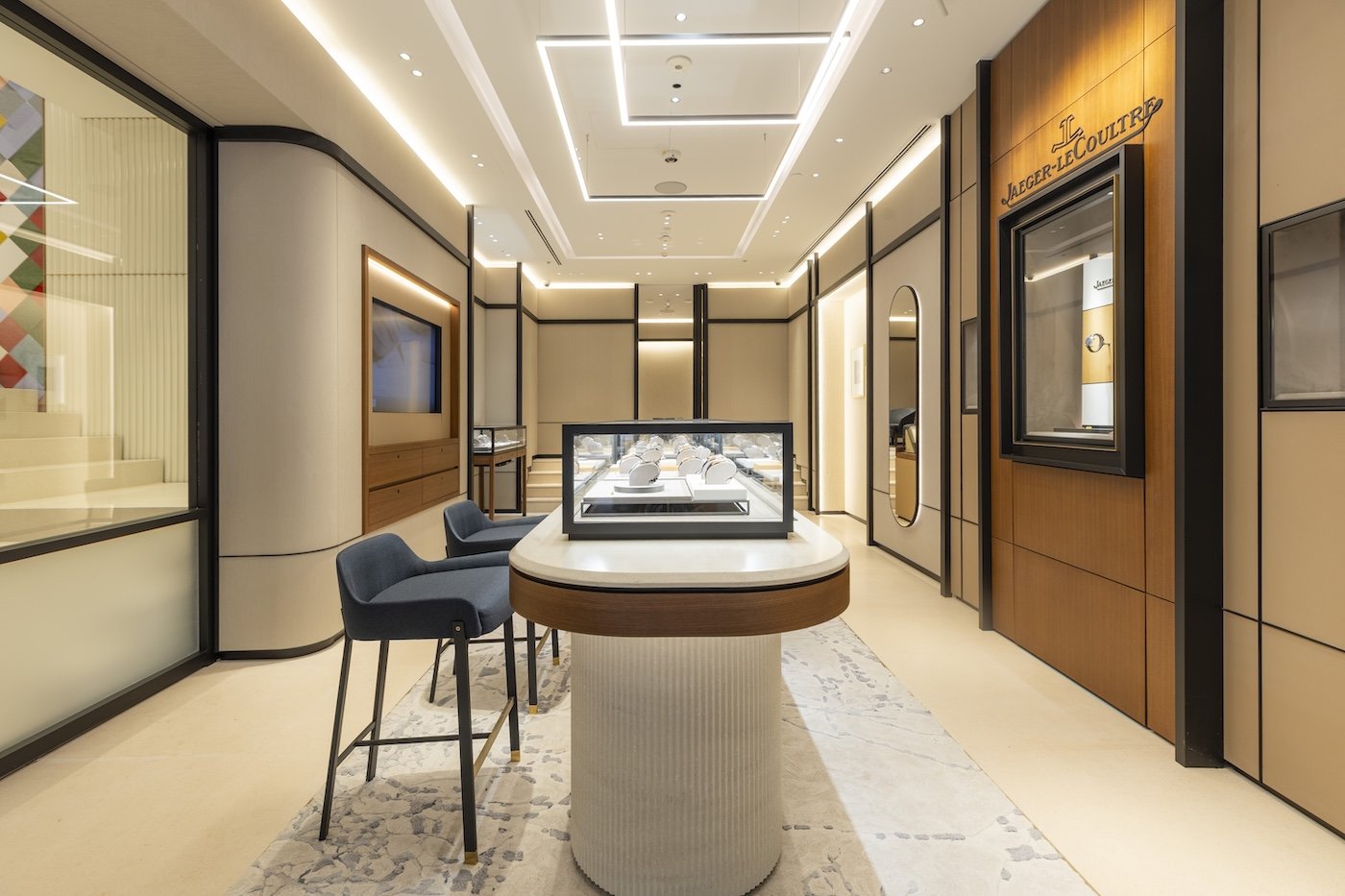
A NEW BOUTIQUE IN LISBON
Europa Star: What are your expectations for this new Jaeger-LeCoultre boutique?
Jérôme Lambert: We have been present in Portugal for decades, and the community of collectors and enthusiasts is both loyal and discerning. This new space has been conceived with them in mind - to feel, in a sense, like home. The materials, the furnishings, the Art Deco aesthetic - echoing the Reverso collection - everything has been designed to reflect the Manufacture’s codes. Only the carpet, a local specialty, is sourced from Portugal, as is the case in all our boutiques.

Avenida da Liberdade, where the boutique is located, is home to numerous mono-brand watch and jewellery boutiques. Do you see this as an opportunity?
I would describe it as a positive ecosystem. Along this avenue, a client searching for a specific watch will encounter a wide array of high-quality alternatives. It allows locals, tourists and international residents alike to find what they are looking for without travelling abroad. I am also pleased to witness Portugal’s economic renaissance, reflected in the growing community of foreign residents. Traditionally drawn to cities such as London or Paris - and more recently Australia - we are now seeing strong momentum in cities like Milan, Madrid and Lisbon, driven by these diverse international communities.

You know the Portuguese market well. How would you describe the Jaeger-LeCoultre client?
The local Jaeger-LeCoultre clientele stands out for its sophistication and deep appreciation of decorative arts. Here, luxury is intimately tied to history and to a rich tradition of craftsmanship. It is a rare characteristic among major global capitals.


