


 Español
 Français
 Pусский
 繁體中文
繁體中文 简体中文
简体中文 Select another language


rtificial intelligence is evolving at a breakneck pace, moving from a futuristic concept to an immediate business reality. With market projections soaring past the trillion-dollar mark and generative capabilities advancing quarterly, the scale of this economic and creative shift is undeniable. For brands, AI is no longer a peripheral trend managed by the tech department; it has become an essential capability that must be woven into the core organisational fabric. It is not a tool of the “future,” but a critical engine for “now” – one that must augment existing operations, optimise decision-making and unlock entirely new models of customer interaction.
In the luxury sector, does this adoption face a unique friction? The very essence of luxury is built on human creativity, exquisite craftsmanship and the irreplaceable “human touch” – values that seem inherently at odds with AI’s automated, data-driven nature. To explore how high-end brands are navigating this territory, DLG experts offer their observations from the front lines of social media, creative, performance marketing, strategy and data. Their insights, drawn from specific brand cases, reveal this perceived conflict as a false dichotomy. They show that when used intelligently, AI does not dilute these core values; it acts as an amplifier, scaling intimacy, translating data into deeper creative expression, and efficiently driving the business in an even more sustainable manner.
Ultimately, whether AI can truly fulfil its promise is not decided by the technology alone, but by the organisational mindset that wields it. If brands view AI merely as a collection of siloed tools or a simple shortcut to cost reduction, its potential will be severely limited. The real transformation begins when AI is treated as a “Shared Intelligence” – a strategic asset that breaks down data silos, connects every customer touchpoint, and augments human teams rather than simply replacing them. As the following cases illustrate, the future will belong not just to the brands that use AI, but to those that truly understand it at an operational and cultural level.
SOCIAL MEDIA: SKATE CULTURE CRASHES ITALIAN LUXURY THROUGH AI’S LENS
By Marie Le Scao, Head of Social Media, DLG (Digital Luxury Group)
ost fashion brands use AI primarily to cut production costs, but Valentino and Vans have approached it differently – as a creative amplifier for one of fashion’s most unexpected partnerships. On paper, an Italian luxury house collaborating with a skate-culture icon shouldn’t work. Yet, their AI-driven campaign turns this tension into strategic coherence, signalling a cultural shift in how audiences perceive technology-infused creativity.
-

- Credit: Courtesy of Valentino
The collaboration kicked off with a campaign video and imagery partially generated using AI, building on original material captured during Valentino’s Le Méta-Théâtre Des Intimités show. Both brands openly acknowledged AI’s role in their Instagram announcement, emphasising that all imagery was produced with the informed consent of models and participants. The campaign leans into a “fluid dimension,” blending Valentino’s polished, rock-preppy glamour with Vans’ raw, grounded skate authenticity. By foregrounding transparency, the brands make AI part of the creative story rather than hiding it.
What makes the campaign work strategically isn’t the technology itself – it’s the precision and creative freedom AI provides in visualising the conceptual bridge between two contrasting brand DNAs. In an industry under constant pressure to differentiate, where most brands follow the same trends, traditional production could not achieve this level of exploration without film-level budgets. AI democratises high-concept creativity, extending rather than replacing artistic vision, helping both brands maintain identity while exploring new territory. The result is compelling: AI enhances creativity, allowing ideas that might otherwise remain on mood boards to come alive.
-

- Credit: Courtesy of Valentino
The collaboration also sets a new standard for luxury brands considering AI. Early audience response suggests resistance is softening: comments are largely positive or neutral when transparency and creative intent align. The approach works because AI is treated as an authentic extension of artistic vision, respecting each brand’s DNA while pushing boundaries. As AI becomes further embedded in fashion production, the key question is no longer whether luxury should use it, but whether it can pinpoint the creative challenges that only AI can solve.
CREATIVE: WHEN PERFECT REALISM UNLOCKS MAGIC
By Aude Degrassat, Executive Creative Director & Partner, DLG (Digital Luxury Group)
uxury storytelling rests on three pillars: unique DNA, uncompromising quality and absolute consistency. This isn’t AI-specific; it’s what defines our industry. But here’s what we’re observing in our practice: when generative AI finally meets luxury standards across these three dimensions, something shifts. The technology stops being a shortcut and becomes a platform for inventing new ways to connect people to the brand’s DNA. Moncler’s entirely AI-generated film From the Mountains to the City is a perfect case in point.
Created by R/GA and Google in four weeks using Veo 2, Imagen and Gemini, the film demonstrates what happens when brand DNA comes first. The story already existed: Moncler’s 70-year journey from Alpine ski team outfitter to urban icon. AI didn’t invent it; AI explored new ways to express it. And it’s this uncompromising quality (perfecting the Maya jacket’s sheen and stitching) that makes the impossible elements emotionally impactful. The snow tornadoes, the fluid mountain-to-city transitions, the era-blending sequences become resonant because they’re grounded in recognisable reality. Quality unlocks magic.
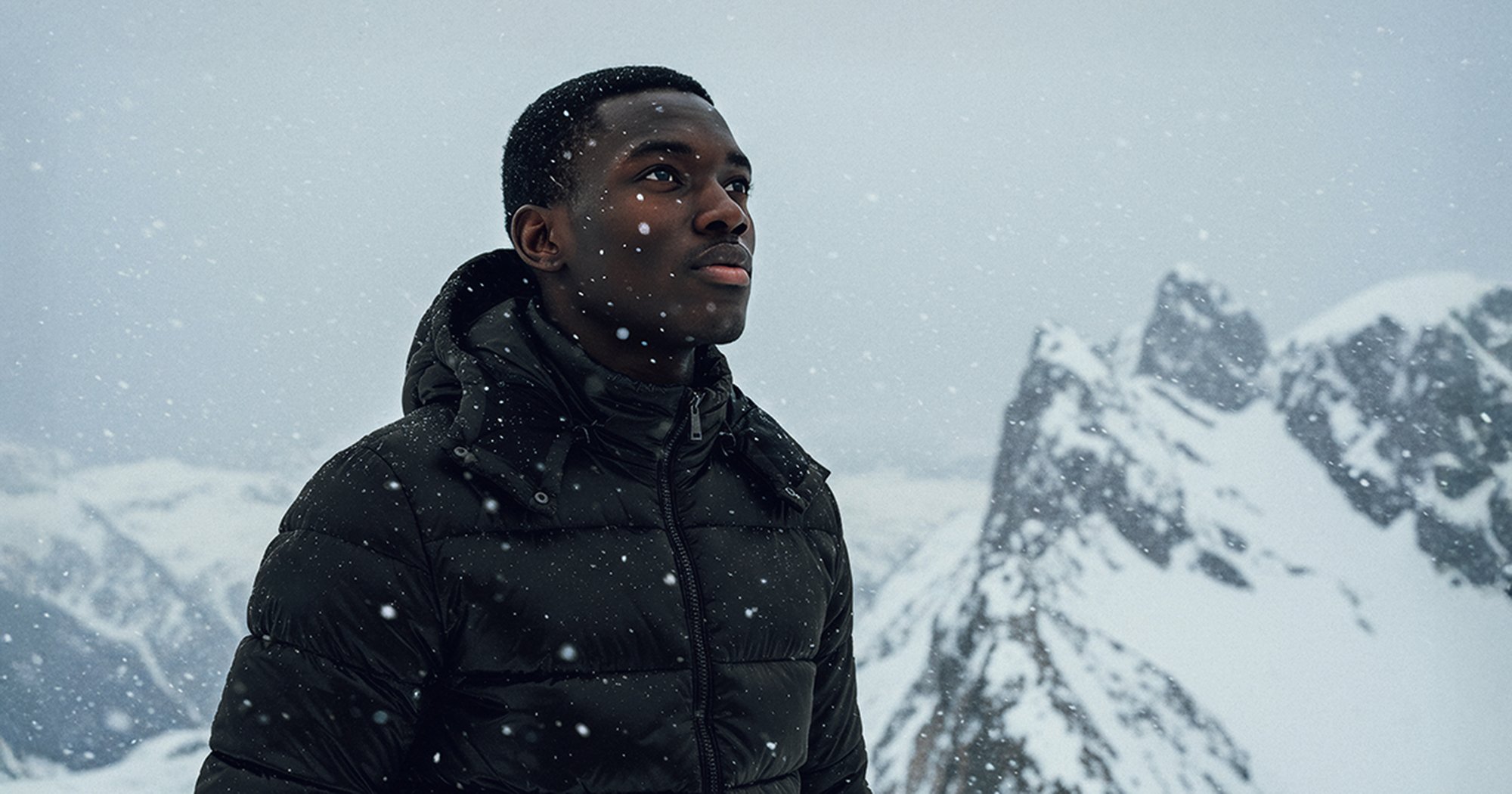
AI’s infinite possibilities become an asset only when the process starts with brand DNA. When AI production becomes so precise that we can skip physical shoots entirely, it isn’t about speed; it is about DNA accuracy that traditional methods cannot replicate. The discipline lies in using AI’s vast capabilities to translate brand essence in more unique ways, not to chase novelty. Moncler’s process (7,000 scenes generated across seven countries for an under two-minute film) reveals the method: it’s a film-production-quality process requiring intensive back-and-forth, curatorial rigour and taste.
The question isn’t whether luxury can use AI without losing authenticity. It’s whether creative teams can harness those possibilities by maintaining the discipline to generate thousands of scenes, curate the final cut and let taste – not technology – make the final call. AI democratises generation. Curation remains the true luxury.
PERFORMANCE MARKETING: BURBERRY’S FIRST-PARTY DATA FORTRESS
By Eloise Bonder-Devaux, Head of Search & Performance Marketing, DLG (Digital Luxury Group)
hile most luxury brands deploy AI to optimise individual channels independently, Burberry repositioned it as shared intelligence – connecting every touchpoint from boutique floors to WeChat Mini Programs. The British heritage brand transformed white-glove service from an in-store ritual into a global system. By treating AI as the infrastructure to scale intimacy, it drove a conversion uplift from personalised recommendations, proving that high-tech and high-touch can coexist.
Burberry’s AI infrastructure operates as a single, integrated ecosystem, blurring the line between digital and physical retail. It intelligently feeds online browsing patterns and purchase history to store associates, while simultaneously using in-store interactions to refine digital personalisation. This system creates a closed loop: every digital touchpoint informs the physical service, and every boutique purchase sharpens the digital relationship. The result is a transformation of customer relationships at scale, proving technology-powered intimacy isn’t an oxymoron when the right infrastructure supports it.
-

- Credit: Courtesy of Burberry
What makes this so smart isn’t the AI itself; it’s the closed-loop data architecture. Traditional luxury marketing is stuck in silos: digital teams optimise online, retail teams deliver in-store service, and nothing connects. Burberry collapsed that divide, making every touchpoint smarter by learning from all the others. The performance insight is simple: acquisition becomes retention when customer intelligence flows everywhere. This reliance on their own first-party data is the key, especially as third-party cookies become unreliable. Traditional methods couldn’t build this relationship depth because they optimised isolated channels, rather than a proprietary knowledge ecosystem that compounds value with each interaction.
This approach signals performance marketing’s fundamental shift from acquisition efficiency to customer lifetime value through relationship depth. Google’s repeated delays in deprecating third-party cookies offer operational continuity but create a strategic trap – brands may delay building first-party infrastructure whilst competitors establish data moats. As AI capabilities commoditise, the defensible advantage isn’t algorithm sophistication but proprietary data quality.
Burberry proves luxury and AI aren’t opposites when technology serves to scale intimacy rather than replace it. The brands that win won’t have the best algorithms; they’ll have the best data architecture, where every interaction improves the next. The question for luxury performance marketers: are you building an integrated data ecosystem that compounds customer intelligence across channels, or deploying isolated AI tools that optimise silos independently? In a cookie-optional world, the answer determines whether you’re constructing competitive advantages or merely renting commoditised capabilities.
STRATEGY: WHEN BEAUTY BUILDS A FOUNDATION MODEL
By Dominic Weir, Strategy Director, DLG (Digital Luxury Group)
hile most beauty brands leverage AI for product recommendations, L’Oréal announced in January 2025 a collaboration with IBM to build what’s believed to be the first AI foundation model for cosmetics formulation – redefining AI innovation at the intersection of beauty, chemistry and technology.
The custom foundation model will leverage L’Oréal’s formulation and component data to accelerate new product creation, reformulation of existing cosmetics and optimisation for scaling up production, better equipping the company’s 4,000 researchers worldwide. More critically, IBM Consulting will support L’Oréal in rethinking the formulation discovery process itself – understanding how renewable ingredients behave in cosmetic formulas to build more sustainable product lines with greater inclusivity and personalisation.
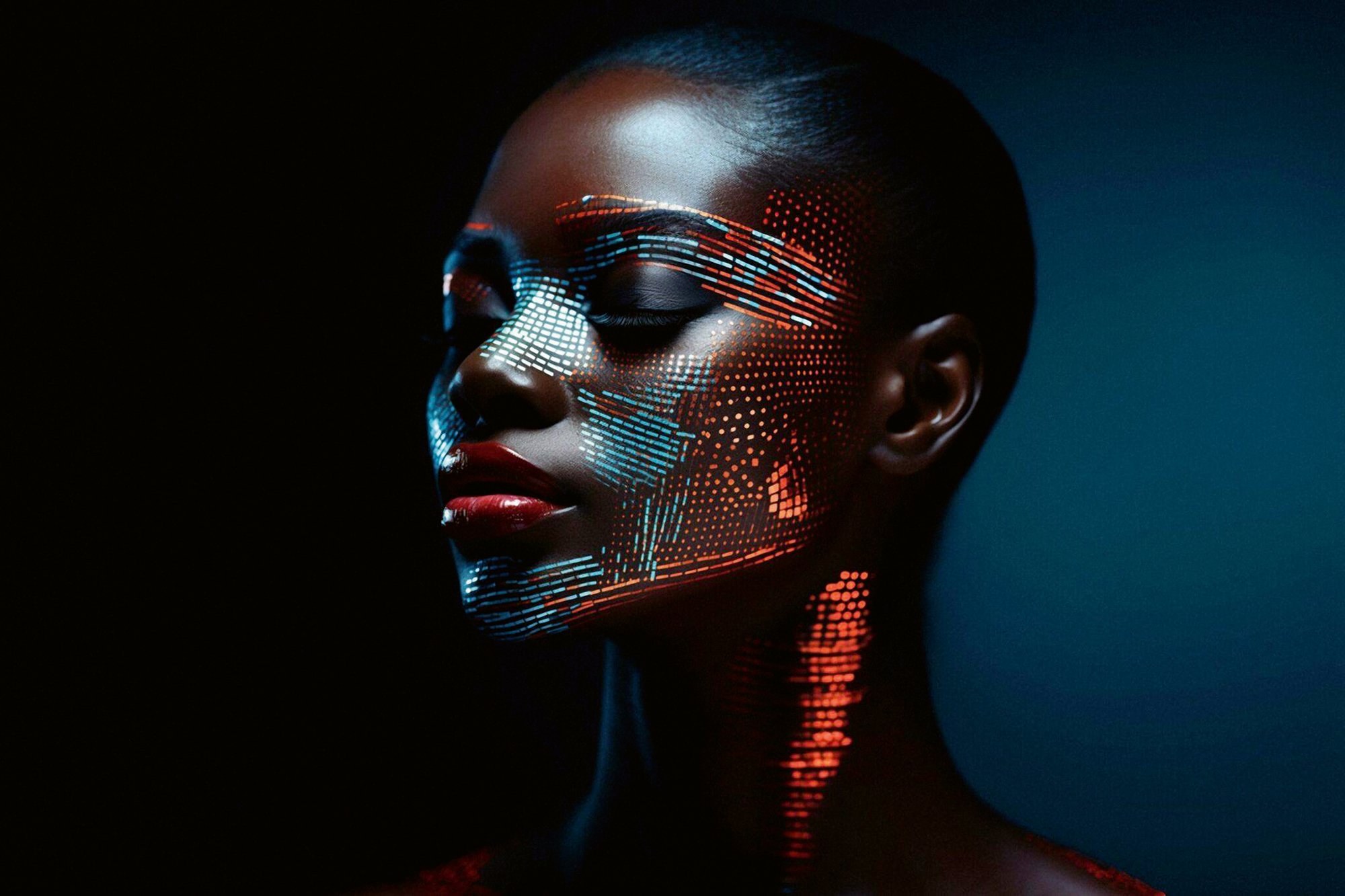
Traditional R&D requires years of physical testing to understand how bio-sourced materials perform across humidity levels, skin types and product categories. Foundation models – trained on broad unlabelled data and capable of applying information from one situation to another – allow IBM to pioneer applications beyond language in areas such as chemistry, time series and geospatial modalities. By training AI specifically on cosmetic formulation data, L’Oréal can model how thousands of ingredients interact virtually, compressing years of lab work into algorithmic predictions. This doesn’t merely accelerate development; it transforms sustainability from marketing aspiration into operational reality.
The lesson extends beyond beauty. AI in luxury shouldn’t be limited to personalisation theatre at checkout – it’s about solving strategic constraints that define competitive positioning. As Matthieu Cassier, Chief Transformation & Digital Officer at L’Oréal Research & Innovation, framed it: "Building on years of unique Beauty science expertise and of data structuring, this major alliance with IBM is opening a new exciting era for our innovation and development process.”
L’Oréal has identified the inflection point where algorithmic capability becomes a brand differentiator: not by using AI to sell products better, but by using it to make fundamentally different products possible. The technology stops being an operational efficiency play and becomes the strategic moat – enabling L’Oréal to credibly lead sustainable beauty while maintaining the performance standards luxury consumers refuse to compromise on. In this framing, AI doesn’t enhance the brand strategy. It is the brand strategy.
DATA: LI AUTO’S AI SHIFT
By Pablo Mauron, Managing Partner China & Board Member, DLG (Digital Luxury Group)
estern premium automobile brands are facing an existential crisis in China, where their sales are plunging. The challenge stems from Chinese rivals making their long-held value proposition far less compelling. Local EV makers are already winning on the “whole cake” – superior pricing, viral campaigns that resonate and car models built for Chinese consumer habits. The knockout blow, the “cherry on top,” is the seamless, localised AI ecosystem – like Li Auto’s – with features so advanced it makes the digital experience in a competing Western car feel dated.
Li Auto’s pivot is absolute, with CEO Li Xiang stating, “AI is the entirety of Li Auto’s future.” After rolling out its first LLM, Mind GPT, in late 2023, the company pushed an upgraded Mind GPT-3o via OTA 7.0 in early 2025. This new model, evolving again with OTA 8.0, powers the AI agent, Li Xiang Tong Xue. It is deeply multimodal, able to “listen, see, and remember,” connecting to Face ID to recall family preferences.
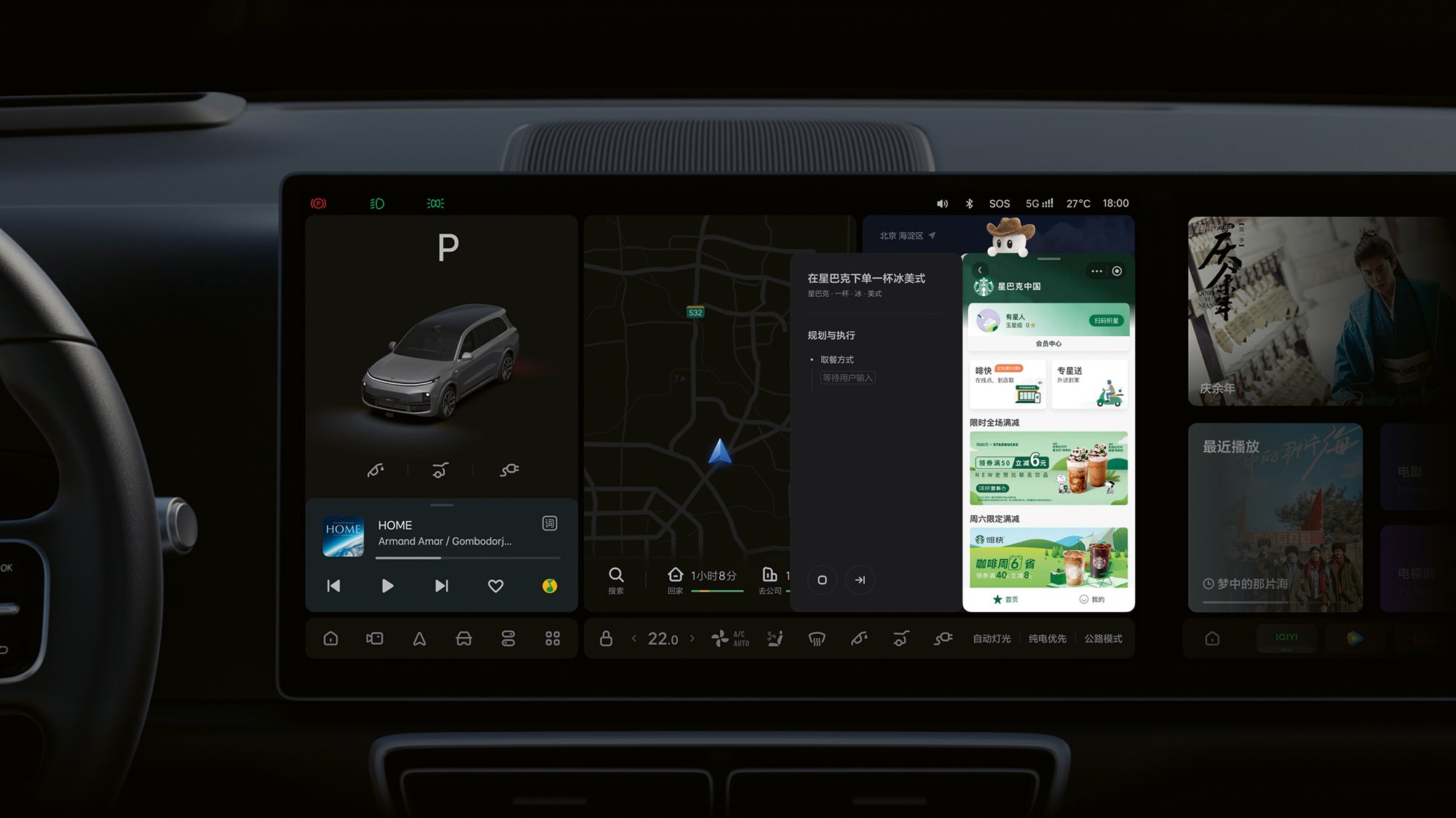
This AI-first focus is a profound strategic shift, not a feature. It directly addresses hardware commoditisation. When all EVs offer a similar range of functions, Li Auto makes intelligence the core differentiator. By developing its AI in-house, it builds a “Memory Network” that learns a family’s habits, and even dialects, creating a sticky, personalised relationship that competitors will find difficult to replicate.
The slower response from Western brands highlights a potential structural disadvantage. This is not a simple feature gap; it’s an operating model gap. Legacy automakers are car companies trying to integrate technology into their product offerings. Li Auto, in contrast, operates like a tech company that happens to make cars. Its organisational structure, agile workflows and rapid iteration speed allowed it to develop and deploy a foundational AI at a pace that legacy brands, with their hardware-focused silos, simply cannot match. This difference in corporate DNA is the central threat.
The lesson for the broader luxury industry is clear: proprietary AI can help brands own the customer interface and build ecosystem continuity. The goal is not to replace human artisans but to leverage AI to scale the high-touch, personal feeling of the in-boutique experience across every digital touchpoint, creating a singular, overarching “brand concierge.” This, however, raises the defining challenge for luxury. A car AI-learning driving habits is one thing. How does a brand build an intimate “Memory Network” of a client’s preferences and habits without violating the core tenets of discretion and trust that define a luxury relationship?


